

STRATEGY 5: KEEPING AN EYE ON YOUR DESTINATION
You must see where you want to be! If you want to be an astronaut, you need to see yourself inside the space ship launching into space. If there is something you want to accomplish, picture yourself achieving it. Athletes see themselves throwing, jumping, running, skating, and swimming faster or better than anyone else. If they didn’t, they would be content to watch from the sidelines. To be a winner you must see yourself as a winner. Paint a beautiful picture of your moment of achievement within your mind. Visit it often. It belongs to you. No one can see it, criticize it, or destroy it. Use it to energize you, excite you, and motivate you to take the steps in your journey to bring you to that moment when your dream becomes your reality.
As a child, I wanted to do all the same things my non disabled friends did. My friends, like most children, liked riding bikes, so I rode a bike. No matter how hard I tried, I was never able to balance a bicycle on two wheels, so my bicycle always had a sturdy set of heavy duty training wheels. This was acceptable to my friends, who were just glad to have me along. However, by age 12, my greatest hope was that when I turned 16 I would be able to get a driver’s license. When I shared this dream with my orthopedic doctor, I was told I would never drive a car and would always depend on family, friends, and taxicabs for transportation. I refused to believe him. I was going to drive a car someday. I was resigned to the possibility that it may not happen at age 16 and that I may have to wait until I was of legal age, but I was determined that someday I would have a driver’s license. Surprisingly, at age 18, I was told by the same doctor who said I would never drive that he thought it was time for me to try to get a driver’s license. It took a very courageous mother, 2 driving instructors, and several failed driving tests before I was award my first driver’s license.
It is important to note that the year was 1967. Only people who were paraplegic and used hand controls were considered for a driver’s license. I suppose no one in their right mind would enable a person who walked on her tiptoes with her knees bent and her arms flailing through the air to legal become a driver. At the time, I failed to see it as a small step forward in the disability movement. To me it was a personal victory—my driver’s license was my key to achieving the independent life I wanted to have. It was just the beginning of a long road paved with endless possibilities.
No matter what your dream is, there are people who will say it will never happen. They be right. Certainly, if you choose to listen to them they will be right. No effort equals no success. Even if you only manage to achieve a small part of your dream, that part may lead you in a different direction in which you achieve more than you ever dreamed possible.
Try, evaluate, decide, and go forth. Life is an endless road of possibilities. Live to discover them!
Linda Thompson, MSRC, has 30 years professional experience serving people with disabilities as instructor and advocate. As a keynote speaker, she addresses audiences of parents, professionals, care providers, students, congregations, and business administrators/employers on the importance of recognizing the individual and abilities rather than the “labels” of disabilities. “People with disabilities are people first. Our disabilities are second.”
www.empoweringusall.com
www.liveforthepossibilities.blogspot.com
Thursday, May 24, 2007

Monday, May 21, 2007
STRATEGY 4: ENJOYING THE JOURNEY
You now have a dream, a vision, and a path to follow. In making the commitment to move forward, it is important to remember this is your dream. It is a process you should want to embrace and even enjoy. It will mean dedicated hard work, but if it is definitely something you want you won’t see it as work. After all this is what you want. It is not something you are required to do as in a job. You are doing it because you choose to change your life. Though the path may be rocky and long at times, keep your eye on the reward and celebrate each step, small or large, you complete. Believe in your dream, and, most of all believe in yourself.
When I was in high school, I pretty much decided I wanted to be a social worker and help people work through their problems. I knew I needed a college degree to do the work I wanted to do, but when I graduated in 1967, I found the doors of universities not only shut, but locked to people with disabilities. There were steps going into every building, multi-floored buildings were often without elevators, building were sprawled across large campuses with no easy access to get from one to another, there were no disabled parking spaces provided, no disabled student service offices to assist with registration or note taking, and professors were not educated in alternate testing methods often needed by the person with a disability. Since it appeared I would not be going to college, I went into a sheltered workshop and earned $0.10/hour counting nuts and bolts and stringing turkey needles. After four days in that place, I vowed I would not spend the rest of my life there. I would go to school and get a good paying job. I didn’t know how or when, I only knew I would. Believe in your dream!
Long story short: I have a BA degree in journalism from Kent State University and a MS degree in rehabilitation counseling from San Diego State University. I have worked in the disability field since 1977. Today I develop curriculum and training materials and do presentations to teach people with developmental disabilities how to increase their independence and live satisfying productive lives. My highest pay rate to date is $50/hour—and I felt I short changed myself. Believe in yourself!
If you have done any traveling at all, you know that things don’t always go as expected. There are potholes in the road, detours, dead ends, flat tires, missed directions, and many unknown obstacles that stand between you and your dream. You always have a choice—quit and continue what you have been doing or accept the challenges and move forward. Learn to enjoy the rough spots as well as the smooth sailing—it is all a part of your journey to success!
Linda Thompson, MSRC, has 30 years professional experience serving people with disabilities as instructor and advocate. As a keynote speaker, she addresses audiences of parents, professionals, care providers, students, congregations, and business administrators/employers on the importance of recognizing the individual and abilities rather than the “labels” of disabilities. “People with disabilities are people first. Our disabilities are second.”
www.empoweringusall.com
Sunday, May 13, 2007
STRATEGY 3: DECIDING THE JOURNEY
OK, you have a dream, you know where you are now, and you know where you will be and what you will have when your dream comes true. You have begun your journey. Yes, I said journey. None of us go anywhere without putting one step in front of another or pushing the toggle switch forward on our power chairs. It is sometimes hard to know what lies before you, but one thing is for certain—you will never know until you move forward.
Think your dream. Feel your dream. Picture your dream. That’s the easy part. Now comes the harder part. Commit to your dream. It would be wonderful if all we had to do was twitch our nose and whatever we needed or wanted would simply appear. But unfortunately life doesn’t work that way. It tries to teach us that anything worth having is worth working for. That is how we learn to appreciate what we have. We all want to be successful and in order to be successful we need to commit to the journey. Success is not an event—it is an ongoing process only achieved by the willingness to keep going forward. However, before you move forward, you need a path to follow. Even Dorothy in the Wizard of Oz had to decide on a path. She knew where she wanted to be and she wanted to be sure she took the best path in order to get to Oz and then back home. What did Dorothy do? She found a consultant. True, the Scarecrow’s was a bit confusing, but she didn’t have much choice since she left her GPS and cell phone at home (ha, ha).
Get yourself a large pad of paper or a roll of butcher paper, color felt pens, crayons, poster paints, or whatever supplies you like to use when you want to express yourself. Write, draw, paint your dream. If you are a writer, describe your dream. If you are an artistic person, draw or paint your dream. Give your dream vision—give it life! When you are done, put it on the bathroom mirror, over your computer, on the refrigerator, or anywhere you will see it daily. Now write down what you feel you must do to make your dream a reality. Do you need school? Training? People? Money? What will it take to get you from here to that vision in front of you? When you have your list, draw a simple side view of stairs. Decide what needs to be done first and put it next to the bottom stair. What should be done next goes next to the second stair and so on and so forth. It is best to remember that each step may take a series of smaller steps. Education, for example, would take research on where to get the needed education, applying for admission, registration, financing, and attending classes. A step may take a month, a year, or several years to complete, but once completed, you will actually be one step closer to your dream. With each step, you are rising up to your own expectations and closer to the reality of your dream.
www.empoweringusall.com
Linda Thompson, MSRC, has 30 years professional experience serving people with disabilities as instructor and advocate. As a keynote speaker, she addresses audiences of parents, professionals, care providers, students, congregations, and business administrators/employers on the importance of recognizing the individual and abilities rather than the “labels” of disabilities. “People with disabilities are people first. Our disabilities are second.”
Friday, April 20, 2007
STRATEGY 2: Know Your Dream
You have a dream! Good for you—you are on your way! Having a dream is like going on a journey. Think about it. Could you pack a suitcase if you did not know where you were going? You would not pack the same clothes for Phoenix, Arizona, as you would for Denver, Colorado, in the middle of January. Right now your dream is a great idea. It makes you happy to think about it. It may even excite you to think about it, but now it needs to become a great plan if it is ever going to become a part of your life.
Before a dream can come true, you truly have to believe it is possible. I believe there is a scene in Peter Pan where Tinker Bell becomes sick and the only thing that can save her is to have everyone say, “I believe.” The positive affirmation of all the children present restores Tinker Bell back to health. Belief is a powerful tool when you have a dream. Unfortunately, it is not as magical as it was as a child. As an adult we often let doubts and fears get in the way of our beliefs. That means we have to work harder and do more than just say, “I believe.”
A dream is more than a wish. It needs work. It needs to be nourished and receive attention in order for it to grow into a possibility. It takes more than a day to grow from an idea to a possibility and then into a reality. When I was about 14, I planted pumpkin seeds on the backyard. Shortly, sprouts appeared, then leaves, then vines, then flowers. Some of the flowers had little green balls under them and I naturally assumed that someday those little green balls would become big, orange pumpkins. I watered them and cared for them waiting for the pumpkins to appear. It never happened. I later learned that the pollen of the male flower had to pollinate the female flower—the one with the green ball—in order to produce a pumpkin. The bees had not done their job. Neither had I. Lack of a step in the process prevented getting the end product. I could simply blame the bees, but it was my lack of knowledge that failed to produce a pumpkin. The following summer I planted pumpkin seeds again. This time I did not leave it to chance—I pollinated the flowers myself and got pumpkins.
Dreams, like life, have no short cuts. Dreams have a process that needs to be acknowledged and followed. Omitting one small step can doom the dream to failure. Exam where you are and what you have now to help you turn your dream into a reality. Picture where you will be and what you will have when your dream becomes your reality. Then you will know it is time to celebrate your success.
_______
Linda Thompson, MSRC, has 30 years professional experience serving people with disabilities as instructor and advocate. As a keynote speaker, she addresses audiences of parents, professionals, care providers, students, congregations, and business administrators/employers on the importance of recognizing the individual and abilities rather than the "labels" of disabilities. "People with disabilities are people first. Our disabilities are second."
www.empoweringusall.com
www.liveforthepossibilities.blogspot.com
Thursday, April 19, 2007
STRATEGY 1: You Got to Have a Dream!
Do you remember being a child? Children know how to dream. They don’t have any stumbling blocks. They don’t know the words, “I can’t.” The world is full of unlimited possibilities. If you ask a child what he/she is going to be when grown up, chances are the child will answer without hesitation “a doctor,” “a teacher,” “a fire fighter,” or “a police officer.” They know of nothing that could prevent them from becoming what they want to be. And yet, many 18 year olds enter college without a clue as to what they want to be when they grow up. What happens to the dreams of the 6 year-old child? Where do they go? How are they lost?
On January 11, 1949, Irene Thompson gave birth to a stillborn female child. A nurse informed the father as the doctor said a prayer and baptized the lifeless child. As the doctor prayed, the child showed definite signs of life. Even though the child was alive, it was not expected to live through the night. That child was named Linda, who is now 57 years-old and is writing this article. Of course there were effects caused by the lack of oxygen to the brain. I was diagnosed about 18 months later as having a condition known as cerebral palsy, which affects the muscle movements in both my legs and arms, as well as my neck. But I was alive and that was all that mattered to my mother. She was determined I would have as much of a life as my sister and brother before me. And she made sure I understood that.
From the 40’s through the 60’s, people with disabilities were hidden from society Children with disabilities were bussed to segregated schools. There were no “inclusion” or “mainstreaming” programs. If a child made it through the eighth grade—as far as the schools for the “disabled” went—he was sent home until he was old enough to go to a sheltered workshop where he would be paid 10 cents an hour to separate and count nuts and bolts. There was no public access to high schools or colleges. A person with a disability was not expected to become a productive member of society.
My mother was light years ahead when it came to visualizing the possibilities in my life. She drove positive affirmations into me, “You can do anything you put your mind to,” “If you don’t succeed, try, try, try again,” and “Anything is possible.” She made me feel if I wanted something bad enough and was willing to work hard, I could accomplish anything.
When I was eight, we drove my older sister to her dorm room at Kent State University. I was impressed and excited as I blurted out to my mother, “Do you think I can come to Kent State someday?” I was oblivious to the roadblocks that stood between me and that possibility, but I am sure mom knew what they were. Not wanting to destroy my dream, she answered, “Anything is possible.”
I graduated from high school in 1967—one roadblock down—but there were very few universities in the country that accepted students with disabilities and none were in Ohio. However, five years later, in 1972, Kent State University established a program to support students with disabilities. I started at KSU in the fall of ’72 and graduated with a journalism degree in 1975.
If you don’t have a dream, find a safe place, search for the child within you, ask your childself what he/she wants to be or do when it grows up. If you rediscover your dream, hold on to it and don’t let anyone steal it from you. Like the song from South Pacific says, “You have to have a dream. If you don’t have a dream, how you going to make a dream come true?”
_____
Linda Thompson, MSRC, has 30 years professional experience serving people with disabilities as instructor and advocate. As a keynote speaker, she addresses audiences of parents, professionals, care providers, students, congregations, and business administrators/employers on the importance of recognizing the individual and abilities rather than the "labels" of disabilities. "People with disabilities are people first. Our disabilities are second."
www.empoweringusall.com
www.liveforthepossibilities.blogspot.com
Saturday, April 14, 2007
I have been doing disability awareness in elementary schools since 1990. I was a coordinator of Keys to Introducing Disabilities in Schools (KIDS)for a couple years. When grants became scarce, KIDS merged with another disabilty awareness group--Disability Awareness Network (DAWN). A few years ago, Sue Racanelli, the coordinator, asked us to write what disability awareness means to us. I have been asked to read my mini essay at the annual luncheon this year. Here is what I wrote:
Disability awareness means...
... entering a class room of students ages 5 - 11 and seeing the wide-eye anticipation, the elbow nudging, the whispers and pointed fingers as I position my power chair in front of the class.
...catching that fleeting look from those students who have been taught that it is impolite to stare, yet finding it difficult not to look at the oddity before them.
...having the room of small individuals struggling to sit quietly as I, the person in the wheelchair, explain how I am more alike than different from them by sharing the need to have friends with whom I can talk, listen, and have fun.
...seeing cold stares of bewilderment melt into intent looks of interest and amazement as I inform them that I live alone in a mobile home (with my service dog, Andre, and my Himalayan cat, Pearl), work a full time job, drive a car, and like to snow ski.
...sitting before a sea of high, outstretched arms with waving hands as the students, who are hungry to learn more, insist on being acknowledged so they can ask their burning questions: how do you get in bed?; how do you take a shower?; what size shoe do you wear?; or, what is your favorite color?
...closing the presentation with the students eagerly circling around me to thank me for coming by shaking my hand or giving me a hug and telling me they want to be my friend.
...that the room I once entered as an oddity I am now leaving as a friend.
...being recognized and greeted by a student six months later in Walmart and have the student introduce me to the accompanying parent.
...the small people with whom I share my life experiences will in the future be parents, neighbors, doctors, teachers, architects, employers, and community leaders. My hope is that I have done something today to bridge the gap of understanding between people with disabilities and the people that may enter their lives tomorrow.
Sunday, April 08, 2007
Women of Worth
Women of Worth: "
45
DAYS
LEFT!NOMINATE A WOMAN OF WORTH Tell us about a Woman of Worth whose volunteer work is making a beautiful difference.
Nominations are due by May 24, 2007
45
DAYS
LEFT!NOMINATE A WOMAN OF WORTH Tell us about a Woman of Worth whose volunteer work is making a beautiful difference.
Nominations are due by May 24, 2007
Friday, March 30, 2007
HBO: Yellow Brick Road I almost cried when I saw this. Boy, it brought back a piece of childhood memories. When I about 10 years old, I started organizing backyard shows with the neighborhood kids. The first year we just sang along with 45 rpm records. The second year we did music from South Pacific and the third year we did music from the Gay 90's. When I was 13, my family moved from Cleveland to Cincinnati. But the next year I was back in business with a new group of kids. I decided to go big and do the whole show of The Wizard of Oz.
I could not find a script, so I bought the soundtrack and the book and wrote the script myself. I wrote, casted, directed, and played the Tin Man. We charged 25 cents for children and 50 cents for adults. We made $100. We went on a local children's tv show and donated the money to United Cerebral Palsy---that was the group's decision.
I would love to see the film they made of this production. If anyone knows how to get a copy, please let me know.
Tuesday, March 27, 2007

MAR. 25, 2007-- I was asked to give a moment of concern at Pilgrim United Church of Christ today. My subject was "labels."
A few weeks ago, our pastor, Madison Shockley, gave a mini sermon on the politically correct terminology on referring to his race and culture. You see Madison is of a minority status in our congregation. In an effort to improve communication with his 90% white congregation, he ended his mini sermon by saying that he preferred being referred to as an African American or Black Folk. I wanted to yell back, "I prefer to refer to you as Madison!" When I told him I would like to respond with my thoughts about labels, he agreed to let me address the congregation.
Here is what I told the congregation:
Labels are for jars, not people.
Labels are intended to describe who we are, what we have done, or some other characteristic. However, labels never tell the whole story. At best, they only speak of a small part of who we are. They can be based on fact or perception. I am white. Madison is black. Those are facts. You can tell that from a distance without ever meeting us. Some people refer to me as "disabled." Am I disabled? Well those who are visiting today would no doubt say, "Yes, of course you are!" But those who have known me for years would probably argue with you by stating all my life accomplishments. Am I disabled? It is a matter of perception. I have a disability, but does that make me disabled? Some will think it does, but others won't.
In the 80's, a small group of people with developmental disabilities living in an Oregon institution formed a new self advocacy group. They needed a name. Judy Cunio, a severely physically disabled woman, said, "We are people first. Our disabilities are second." That was the birth of People First, a self advocacy organization that is now an international organization. If anyone here would like to know what it means to 400 individuals who are constantly labeled to be considered "people first," I invite you to come to the San Diego People First Conference at the Marriott in Mission Valley on Mother's Day weekend. We have volunteer opportunities and I guarantee it will be an unique learning experience.
There are many labels people can or have used on me--disabled, amazing, sinner, lefty, and a label given by one young member of our congregation, Sam. He calls me "the lady with the dog" (Andre is my service dog). But there are only two labels I accept. One is my name "Linda." The other is "child of God." As a child of God, I know I am loved, accepted, and forgiven no matter how others perceive me. With God, I am always a person first.
Note: I received a standing ovation.
Thursday, March 22, 2007
www.liveforthepossibilities.com : 'Superwoman Linda Thompson, Born With Cerebral Palsy, Reveals Breakthrough Strategies For Living
Large Without Limitations...!'
In this Powerful FREE E-Course, Linda reveals to YOU 9 powerful lessons for living a life of possibilities not impossibilities. Linda has inspired many to turn their dream into reality. Take advantage of this amazing information that will lead you down a journey of discovering new possibilities in your life and achieving all your dreams!"

Home: The Christmas Puppy, an e-book. "This is a heart warming story about a puppy in a pet store who has only one wish--to find a home and someone special to love and who can love him. All the puppies, except for one, have been promised a new home on Christmas Eve. Being passed over time and time again, the puppy feels he is too old and too big to ever be adopted, but he learns Christmas is a time for miracles.
The Christmas Puppy is a story that touches lightly on differences that can lead to discrimination and how that can feel. It also shows how an encouraging word can help build confidence. And, last but not least, when things seem to be as bad as they can get, it is possible that someone will enter the picture and convincingly show that differences don't only not matter, but also may be beautiful.
A life lesson and story on love and differences for children of all ages."
Wednesday, March 21, 2007
Creating Your Own Path
Creating Your Own Path: "If you are a person with a disability, a parent who has a child with a disability, or a professional who works with a person with a disability and you are looking for an inspirational role model, you have found her. Linda Thompson, 58, born with cerebral palsy, has successfully created a productive, independent life for herself. Taught by her mother who was light years ahead of society in her vision of accomplishments for her daughter, Linda managed to forge through the inaccessible barriers that existed the first forty years of her life. Her story is a must to hear for anyone who faces a life of extraordinary challenges in their life.
For the last three years, Linda has created training materials for people with developmental disabilities on self advocate mentoring and how self advocate can become involved in community service. She has traveled throughout California presenting the trainings to People First chapters. Descriptions of the trainings Linda can provide are provided through this website. Can't find what your group needs? Contact Linda and she will create a Power Point presentation tailored to meet your needs. She is also known to be a motivational keynote speaker."
For the last three years, Linda has created training materials for people with developmental disabilities on self advocate mentoring and how self advocate can become involved in community service. She has traveled throughout California presenting the trainings to People First chapters. Descriptions of the trainings Linda can provide are provided through this website. Can't find what your group needs? Contact Linda and she will create a Power Point presentation tailored to meet your needs. She is also known to be a motivational keynote speaker."
Wednesday, November 08, 2006

October, 2006
I am not a fearful person. Fifty five years of living as a person with cerebral palsy has taught me that to live and experience life one needs to be willing to take risk. It is not that I believe in living carelessly for the thrill of excitement, but I do believe there is an element of risk in everything we do in life. I believe that a person can take risks and still safeguard personal safety. With a touch of wisdom, caution, and good planning, one can lead a fulfilling life free from fear of the unknown.
But what happens when all the wisdom, caution, and good planning is yanked out from underneath you and you have nothing but instinct and the will to survive. The world can quickly become a scary, lonesome place in a second of time, It can happen to the best of us.
Several months ago I was hired by People First of California (PFCA) as a Program Coordinator of the Self Determination Project. I live in Vista, CA, 40 miles north of San Diego, and my employer, PFCA, is based in Sacramento. My job responsibilities include leading a team of three other people in developing a training in Self Determination and a new program called the IPP Buddy System. Once the team developed the training materials, we traveled to different People First chapters around the state to present the training to individuals who have developmental disabilities. Self Determination is a concept where an person with a developmental disability becomes a strong self advocate and learns to take responsibility over all the aspects of his/her own life. The IPP Buddy System pairs up a strong self advocate with a self advocate who needs support in advocating for the wants and needs in his/her annual individual personal planning meeting.
When I was interviewed, I was told there would be traveling involved with this position and asked if that would be a problem. I said “no,” for I have done a great deal of traveling alone---Ohio, Rhode Island, Florida, Washington, D.C., and Hawaii. I like traveling and am well versed on travel procedures by plane and train. Though I had never traveled long distance by bus, I had used the local public transit system. Certainly, I could handle traveling throughout California. So I thought. I had never gone to Ukiah, and now that I have been, I hope to never go back. Don’t get me wrong---some of the nicest people I ever hope to meet live in Ukiah, but the trip there and back turned into a major life experience. One I never want to repeat.
My trip to and from Ukiah was a nightmare. I drove from Vista to Orange County Airport to fly to Oakland. Some how the Super Shuttle reservation from the Oakland airport to the Greyhound station got canceled and it took two hours to get a ride, because they had to call a driver in San Francisco who had to pick up the ADA van. I missed the Greyhound bus and the next one was not until 11:40 p.m. and they could not tell me if it would have a wheelchair lift. And they couldn't tell me WHEN they would be able to let me know. In my research of this trip, I knew there was an Amtrak train to Martinez and an Amtrak bus to Ukiah. I called Amtrak---the train would leave at 1:45 pm and yes, the bus leaving for Ukiah had a wheelchair lift. The shuttle showed up at 1:15 and I told him I had to catch a 1:45 train at Amtrak. He took his sweet time gabbing with another driver and then halfway there he decides to stop for gas. I was having a fit, so he finally said if I missed the train, he would drive me to Ukiah. We walked into the Amtrak station and the clock over the desk said exactly 1:45. I was convinced I had missed the train, but the guy behind the desk said it was a couple minutes late. He sold me the ticket and I caught the train as they made the last call. In Martinez, I went to get on the bus, only to be told the wheelchair lift did not work. I must have had fire in my eyes as I said, "You've got to be kidding!" There was another bus there with a lift, so the drivers traded buses. When the driver put me on the bus, I said I WOULD SHOW HER HOW TO TIE DOWN THE SCOOTER. All of a sudden we were on the road and I was not tied down. As I struggled to remain upright, a passenger asked if I wanted her to tie my scooter down. She did, but one tie was not tight enough and I tipped half way over slamming into the side of the bus. The passenger who tied down the scooter grabbed me and pulled me upright again. She yelled to the driver that I had fallen over, and the driver yelled back that the other driver had told her that it was not necessary to tie my scooter down since it was so heavy. I yelled back, "No one asked me!" I suggested she put the other driver in a scooter and take him for a ride without being tied down!! Another passenger adjusted the tie down straps, but the driver never stopped to check them or me. On the way to Ukiah, the driver had to stop a couple times for gas and radiator water and to let passengers use the restrooms---the restroom on the bus was out of order. Originally, I was due in to Ukiah at 4:05 p.m. and Dial-A-Ride was picking me up at 4:30 pm. I had to cancel that ride and was told to call when I arrived. However, they close at 7 pm. The 3:30 bus from Martinez to Ukiah was due to arrive in Ukiah at 5:55 p m. We arrived at 7:10 p.m. I was stuck at Burger King--- a mile and a half with no ride to the Hampton Inn. I had studied the Yahoo map, so I had some idea what my route would be. I confirmed it with the kid behind the Burger King counter and started out into the dark night.
I soon decided I would kill myself on the sidewalks that ended, slanted, narrowed, and had no curb cuts. I felt safe in the street, which was wide and not heavily traveled, and for the most part, was well lighted. I entered the Hampton Inn and exclaimed, "I made it!" The clerk assured me I had and then proceeded to tell me the reservation Becca and Mike made two months ago was not in the computer. With a phone call and a little help from Mike, Becca and I were given an "accessible" room. The room was beautiful and so was the bathroom, except for one thing---the tub. It had grab rails and a bench. Normally this would be great, but the bench was at on end of tub and the shower controls were at the other end of the tub. Does anyone reading this have arms 5 to 6 feet long? I don't and the tub was too narrow to place a stool or a chair inside it. It was useless to anyone who could not stand. The next night I was put in a room with a roll-in shower, but the same design prevailed. The roll-in shower had a hand held shower head, but the cord was long enough to reach to the back of the tub where the bench was. However, a patio chair could be placed inside the shower.
The return trip was traumatic to say the least. I left the hotel at 9 am Saturday and got home 4 pm Sunday. Amtrak sent the bus with the broken lift that had to be traded on Thursday to get me to Ukiah. The bus driver made a call on his cell phone and I heard him say that the compartment door to the lift had been frozen shut for at least a week and he had reported several times. When the call ended, he told me they were sending me a cab. I asked what that meant, but he walked away, got on the bus, and drove away leaving me in the Burger King parking lot.
I was determined that I would not sit there and wait for nothing to happen. I called the Amtrak 800 number and got an operator that simply did not want to deal with me and told me I would have to call back. I talked to the Burger King manager and one of her employees called Amtrak and after a period of time she came and handed me a cordless phone. I found myself on a three way call with someone named Marge, who sounded male. He explained that there was a bus coming through Ukiah on the way to Martinez, but it didn't have a lift. I asked him what he was trying to tell me. He said I would have to wait until Sunday morning to get a bus. After I threw a fit, explaining I was sitting in a Burger King with no place to stay, it was decided to switch buses in Ukiah with the bus going to Eureka, which had a lift. I was to leave Ukiah at 10:20 am and did not leave until 2:50 p.m..
That put me 4.5 hours behind schedule. I had to reschedule the 3:10 pm train from Martinez to Oakland for 6:40 p.m.. My 6:50 p.m. flight from Oakland to Orange County was the last flight of the day and had to be rescheduled for 9:50 am Sunday. Of course the shuttle from Amtrak to the airport also had to be canceled. I got to Oakland around 7:35 pm. I had no idea what to do or where to go. The guy at the Amtrak desk gave me a bus voucher and the bus outside the station took me downtown to the Bart --- the subway system. I took the elevator down---a talking elevator at that. The lady at the Bart info booth helped me buy a ticket out of a machine. She pointed to the elevator and told me to get the Fremont train. Subways can be scary and I was nervous, so I jumped on the first train that stopped. For some reason I instinctively knew I was on the wrong train going the wrong way. I asked a passenger where I was going and told him where I wanted to go. He told me to get off and take the next train to 19th street and transfer to the Fremont train. When I got off, I met a woman with a cell phone and bike who told me to get the Dublin train and it would take me to the Coliseum/Airport stop without transferring. She was right. I got off and was greeted by a Bart info person. I told him my situation and he said the bus outside would take me to the airport, but not hotels. He said I needed a hotel shuttle with a wheelchair lift. I laughed---hotels don't usually have shuttles with wheelchair lifts. He then said I may have a problem finding a room since many people were coming in Saturday night for the Raiders game on Sunday. He made a list of hotels and phone numbers. The first one I called had an available accessible room and a shuttle with a wheelchair lift. They came and got me and the room was big, gorgeous, and the best bathroom and roll in shower I have seen in quite a while. I had not eaten since 1 p.m. and it was after 10 p.m. when I got to the hotel. The restaurants at the hotel and across the street were closed, so the guy at the desk sent someone to the kitchen to make me a turkey and cheese sandwich with a glass of cold milk. Their shuttle took me to the airport in the morning..
I teach social skills and try to encourage people to be cautious when seeking out strangers for help. It is best to ask people who are working and are a recognizable authorities—policeman, bus drivers, and mail carriers. If there are no people of authority, choose someone from a crowd of people, so if there is a problem, there will be others to help. In my case, it was only through the “kindness of strangers” that got me to a safe place to spend the night in a strange town and the ability to safely return home.
Nov. 8, 2006
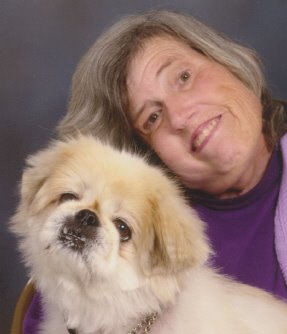
I have been employed by People First of California for the past 2.5 years as a Project Coordinator. I develop training materials designed to educate and empower people with developmental disabilities. I, as a member of a team, then travel throughout California providing the training to advocacy groups. I am a person who was born 57 years ago with a condition known as cerebral palsy, which effects my body movements, but not my intellect. I am completely independent--live alone, drive a van, and have a full time job. For mobility, I use an electric scooter. My only true assistant is my service dog, Andre---a 10 year old Pekingese. When we travel, it is just me and Andre against the world.
In the past 2.5 years, I have learned how well, and, unfortunately, how not so well the American Disability Act (ADA) is working in our great state of California. In days to come, I will share some of my travel stories, especially my horror story that left me stranded in downtown Oakland on a Saturday night. Stay tuned for some interesting, mind boggling adventures.
Subscribe to:
Posts (Atom)